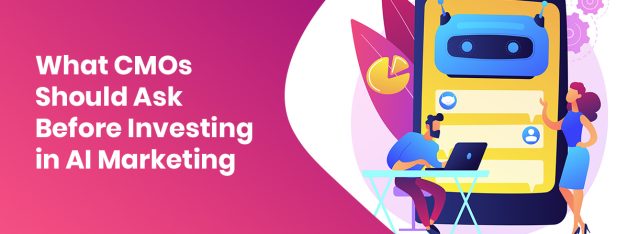
What CMOs Should Ask Before Investing in AI Marketing Tools
The pressure on marketing teams has changed. Faster cycles. More channels. Higher expectations from leadership. And, of course, a growing list of platforms promising to fix everything with automation.
This is why AI marketing tools keep showing up in boardroom conversations. They promise better targeting, smarter decisions, and fewer manual processes. On paper, it all looks convincing.
In practice, it is more complicated.
Some teams see real gains. Others end up with expensive tools that barely get used. The difference usually comes down to the questions CMOs ask before signing off on the investment.
Why CMOs Are Re-Evaluating AI Marketing Tools Investments
The Explosion of Marketing AI Solutions
Over the last few years, the market has been flooded with marketing AI tools. Every platform claims to offer smarter insights, faster execution, and better performance. Some focus on content. Others on analytics. Many promise end-to-end automation.
This explosion has made choice harder, not easier. The problem is not availability. It is clarity. Most CMOs are now less worried about whether AI works and more concerned about where it actually fits into their organisation.
That shift is healthy.
Strategic Alignment and Data
Before any discussion about features, there is a more basic question. Does this tool align with the company’s strategy and data reality?
Many AI tools for digital marketing assume clean data, clear processes, and well-defined goals. Few organisations start there. Without that foundation, even the most advanced system struggles to deliver value.
This is often where early disappointment begins.
What Business Problem Should These AI Marketing Tools Solve?
Buying technology without a specific problem in mind rarely ends well. The same applies here.
Some teams want better customer segmentation. Others want faster campaign execution. Some want clearer performance insights. All of these are valid, but they are not the same problem.
Aligning AI Tools With Marketing Objectives
The strongest results usually come when AI marketing tools are tied to one or two concrete outcomes. That could be improving lead quality, increasing conversion rates, or reducing manual reporting time.
When goals are vague, success becomes hard to measure. Tools end up being underused. Teams lose confidence. The investment quietly becomes shelfware.
Clarity at this stage saves a lot of friction later.
How Does the Tool Use AI Automation in Practice?
Not every tool that mentions AI actually uses it in a meaningful way. Some rely on rules. Some automate workflows. A few genuinely learn from data.
Understanding this difference matters.
Automation vs Intelligence
Traditional automation follows instructions. If this, then that. AI automation is supposed to go further. It should adapt. It should improve over time. It should surface patterns humans might miss.
Many platforms sit somewhere in between. They are faster than manual work, but not truly intelligent. That is not necessarily bad. It just needs to be understood.
Use Cases That Justify AI Automation
The strongest use cases usually involve scale or complexity. For example, large datasets, multiple segments, or rapidly changing signals. This is where marketing automation AI can reduce effort and improve consistency.
For smaller, stable workflows, simple automation might be enough. Overengineering is a real risk.
How Does Marketing Automation AI Impact Team Efficiency and Skills?
Technology never works in isolation. It changes how teams operate.
Human and AI Collaboration Models
The best outcomes rarely come from replacing people. They come from redesigning how work gets done. Marketing automation AI can handle repetitive tasks, surface insights, and suggest actions. Humans still decide what matters and why.
This shift often requires new skills. Less time spent building reports. More time interpreting them. Less manual segmentation. More strategic thinking about audiences.
When this transition is planned, teams usually become more effective. When it is forced, resistance follows.
How Should CMOs Measure ROI From AI Marketing Tools?
ROI is not just about saving money. That is the easy part to track. The harder, and often more important, question is whether decisions are getting better.
KPIs Beyond Cost Savings
Yes, efficiency matters. But CMOs should also look at metrics like:
- Quality of customer segmentation
- Speed of campaign optimisation
- Consistency of execution across channels
- Improvement in decision confidence
In many cases, the real return from AI marketing tools shows up in fewer mistakes, faster learning cycles, and clearer priorities.
Those benefits take time to appear. They are still worth measuring.
FAQs
What should CMOs look for in AI marketing tools?
CMOs should look for clear alignment with business goals, realistic data requirements, and evidence that the tool supports better decisions, not just faster execution. The best AI marketing tools fit the organisation’s strategy, not the other way around.
How does AI automation differ from traditional marketing automation?
Traditional automation follows fixed rules. AI automation adapts based on data, learns over time, and can surface patterns that were not pre-defined. The difference is not just speed, but flexibility.
Can customer segmentation really improve with AI?
Yes. Customer segmentation can become more dynamic and granular when supported by AI, especially in environments with large datasets or rapidly changing behaviour.
Are AI tools for digital marketing suitable for all company sizes?
Not always. Some AI tools for digital marketing are built for scale and complexity. Smaller teams may benefit more from simpler systems until their needs grow.
How can CMOs identify genuine marketing AI tools?
Look beyond the label. Ask how the system learns, what data it uses, and how decisions are made. Genuine marketing AI tools can explain their logic and show improvement over time.
Leave a Comment Cancel reply
About Author

SHAYESTA SHAHZABEEN
A marketeer, research fanatic and love reading about brands. I am a seeker, who sees unlimited opportunities and is guided by a value system that focuses on doing good.
Recent Articles
- Understanding Digital Marketing Analytics: A Leader’s Guide to Data-Driven ROI
- Email Marketing Strategies for Higher Conversion Rates: The Ultimate ROI Playbook
- Effective Social Media Marketing Techniques to Scale Brand Growth and Engagement
- How to Improve Online Visibility Through SEO: A Complete Strategy Guide
Recent Comments
- Trisha on Why Blog Commenting is a Powerful Tool for SEO?
- Ravish Shanbhag on BC Web Wise has been Recognized as One of the 25 Most Creative Agencies, Globally
- ricky sinha on BC Web Wise has been Recognized as One of the 25 Most Creative Agencies, Globally
- Manish Puri on All you need to know about Design Thinking, but were afraid to ask!
- Kanchan S Satpathy on All you need to know about Design Thinking, but were afraid to ask!
Recent Articles
- Understanding Digital Marketing Analytics: A Leader’s Guide to Data-Driven ROI
- Email Marketing Strategies for Higher Conversion Rates: The Ultimate ROI Playbook
- Effective Social Media Marketing Techniques to Scale Brand Growth and Engagement
- How to Improve Online Visibility Through SEO: A Complete Strategy Guide
Recent Comments
- Trisha on Why Blog Commenting is a Powerful Tool for SEO?
- Ravish Shanbhag on BC Web Wise has been Recognized as One of the 25 Most Creative Agencies, Globally
- ricky sinha on BC Web Wise has been Recognized as One of the 25 Most Creative Agencies, Globally
- Manish Puri on All you need to know about Design Thinking, but were afraid to ask!
- Kanchan S Satpathy on All you need to know about Design Thinking, but were afraid to ask!